- **Disclaimer**
Master Gardeners Grow Shop is an independent online business operated by individuals trained through Cooperative Extension Services Master Gardener and Master Composter programs. We are not affiliated with or endorsed by the U.S. or Canadian Cooperative Extension System or any state Extension Services.
This page contains affiliate links. Master Gardeners Grow Shop is a participant in the Amazon Services LLC Associates Program, an affiliate advertising program designed to provide a means for sites to earn advertising fees by linking to Amazon.com. We earn commissions on qualifying purchases. View full affiliate disclosure(#Affiliate Disclosure)
Winter Plant Protection: Essential Tips to Save Your Landscape from Frost Damage
Winter damage to landscape plants costs homeowners thousands of dollars each year in lost plants and reduced property value. Cold temperatures, freezing winds, and rapid temperature changes can kill or severely damage even established plants if left unprotected.
The good news? You can actually prevent most winter damage with a bit of know-how and some planning.
You can protect your landscape investment by combining smart plant selection, proper maintenance practices, and strategic winter protection methods. This guide pulls together expert-backed techniques to help you safeguard your plants through the coldest months.
You’ll find tips on choosing the right plants for your climate, using protective barriers, and even some recovery care for when winter finally lets up.
Whether you’re dealing with delicate broadleaf evergreens, newly planted trees, or old flowering shrubs, there are specific strategies for each. Knowing how winter weather affects different plants, and when to act, can mean the difference between a lush spring garden and a yard full of regrets.
Understanding Winter Damage to Landscape Plants
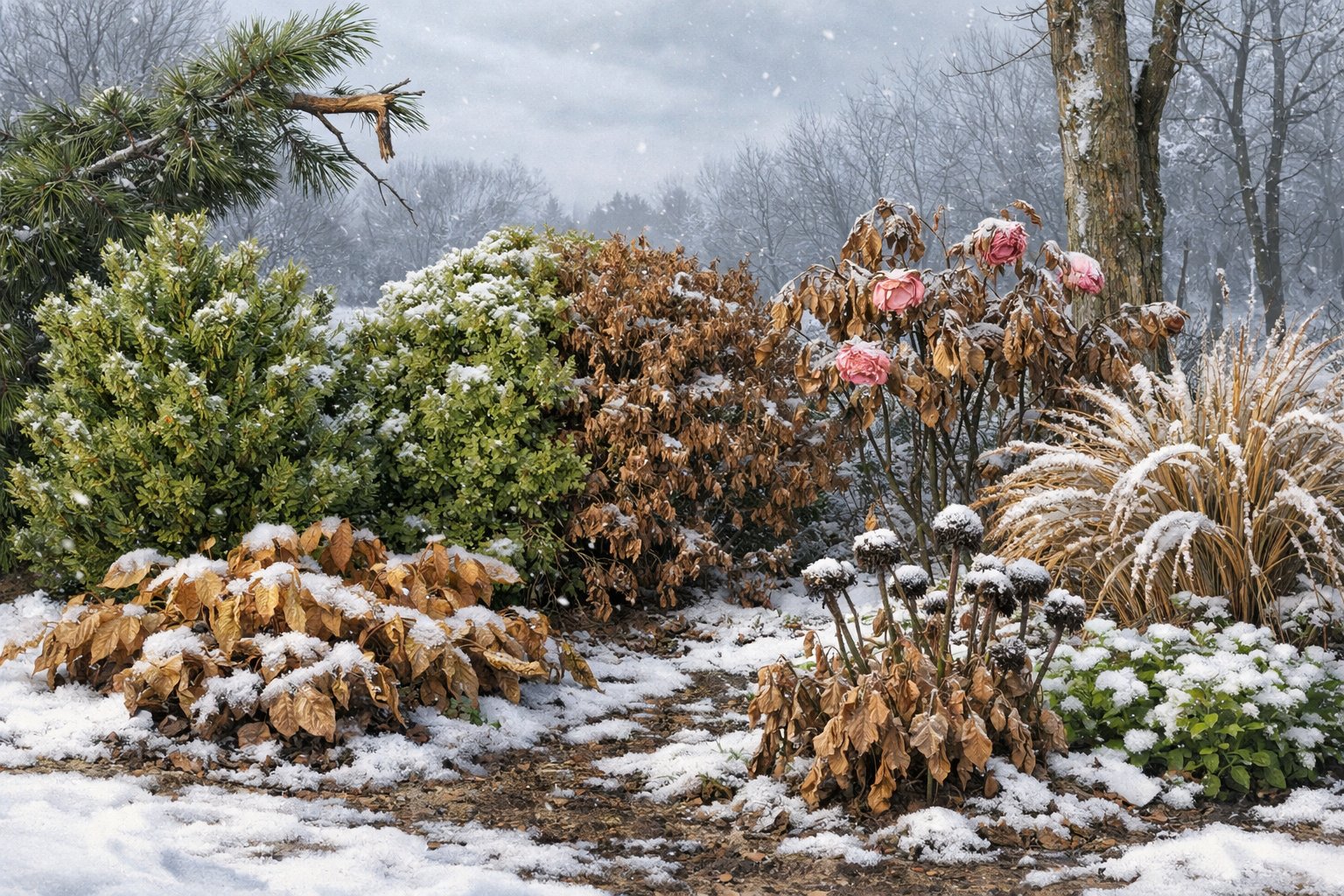
Winter damage hits plants in different ways, depending on the species. Sometimes you don’t even see the damage until weeks or months after the injury happens.
Types of Winter Injury
Frost and freeze damage happens when ice forms inside plant cells, causing them to burst and die. This usually attacks new growth and soft tissue first.
The worst damage comes when a warm spell is followed by a sudden freeze, because plants haven’t had time to toughen up.
Winter desiccation is another big problem. Plants lose moisture through their leaves and stems faster than their roots can replace it from frozen soil.
Broadleaf and needled evergreens are especially vulnerable here. When the sun is bright, the wind is blowing, and the ground is frozen, plants can basically dry out—even though they look fine at first glance.
Sunscald and frost cracks show up on the south and southwest sides of tree trunks. Warm winter sun wakes up the bark, and then a cold night freezes those active cells, splitting the bark open.
Salt damage from road deicers burns leaves and roots. Salt spray sticks to buds and leaves, while runoff seeps into soil and damages roots.
Vulnerable Plant Species
Broadleaf evergreens like rhododendrons, azaleas, boxwood, and hollies lose moisture all winter and suffer the most from desiccation. They keep their leaves year-round, so they’re always at risk.
Newly planted trees and shrubs struggle because their roots aren’t established yet. Fall-planted specimens are at particular risk since they haven’t had enough time to settle in before winter hits.
Marginally hardy plants outside their recommended USDA zones often can’t handle extreme cold. They might survive a mild winter, but a harsh one can wipe them out.
Young trees with thin bark, like fruit trees, maples, and lindens, are prone to sunscald and animal damage.
Common Signs of Damage
Brown or bronzed foliage on evergreens usually points to desiccation. You’ll see browning on the side facing the wind or the sun. The leaves might hang on for months before dropping.
Cracked or split bark shows up as vertical wounds, most often on the south or southwest side of trunks. Sometimes the bark peels away, and you might notice discolored tissue underneath.
Dead branch tips become obvious in spring, when the rest of the plant leafs out but some parts stay bare. You can scratch the bark to check for green tissue—if it’s green, it’s alive.
Stunted spring growth or plants that don’t leaf out at all often mean root damage from cold, soil upheaval, or salt. Sometimes you’ll see weak shoots; sometimes, nothing happens at all.
Selecting and Positioning Plants for Winter Resilience
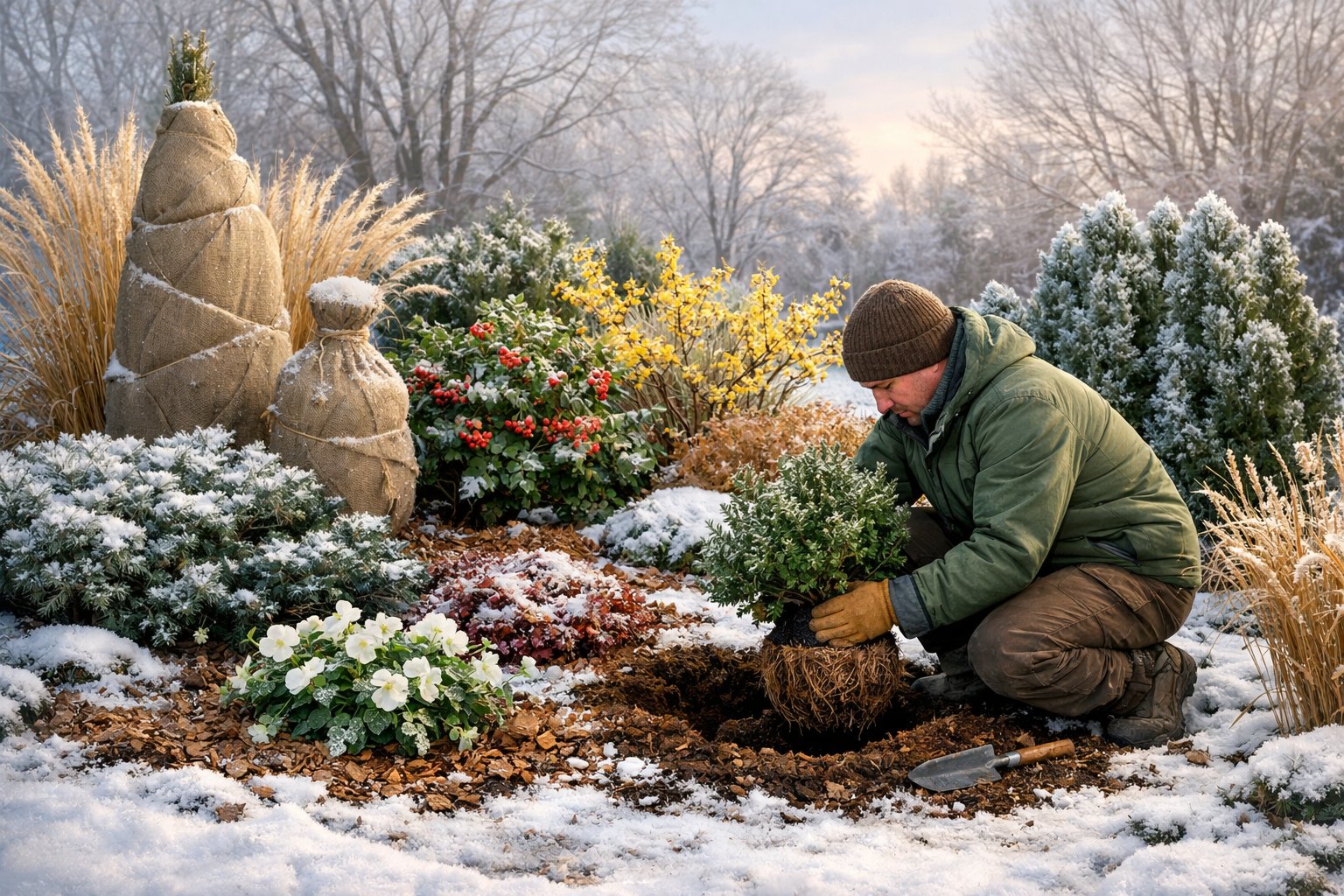
Picking the right plant for the right spot really matters once winter rolls around. Knowing your hardiness zone and your property’s quirks—like wind tunnels or sunny walls—helps you choose plants that can handle your winters.
Choosing Winter-Hardy Varieties for Your USDA Zone
Your USDA hardiness zone tells you the average coldest temperature in your area. Plants rated for your zone or lower are built for your winters.
Always check plant tags and catalogs for hardiness info. If something’s rated for Zone 5, it’ll survive in Zones 5 through 9, but not in Zone 4.
Some plants list a range, like “Zones 4-8.” If you’re in Zone 4, it’s safer to pick something rated for Zone 3 or 4, just to be sure.
Microclimates are a thing. Low spots freeze faster than hills, and southern exposures stay warmer than the north side of your house.
Native plants generally handle winter better than exotics. They’ve evolved to deal with your local weather, wild swings and all.
Evaluating Site Microclimates
Buildings, walls, and even big rocks create mini-climates with their own temps. A spot next to a south-facing brick wall can be 10–15 degrees warmer than the rest of your yard.
But watch out—heat reflecting off buildings can cause plants to freeze and thaw over and over. That back-and-forth is rougher on plants than steady cold.
North-facing walls keep plants colder, but they also thaw more slowly in spring. That can actually help protect early-bloomers from surprise frosts.
Cold air moves downhill and pools in low areas, making “frost pockets.” These spots stay coldest and are the last to warm up in spring. If you have tender plants, put them on a slope or higher ground.
Optimizing Placement for Wind Protection
Winter winds dry out plant leaves fast. Evergreens and woody plants especially need protection from windburn.
Put vulnerable plants on the sheltered side of fences, hedges, or buildings. Solid walls can cause swirling winds, so hedges or slatted fences are often better.
Group plants together so they shield each other. The ones in front take the brunt and protect those behind.
Evergreens need windbreaks most of all. Place them where something blocks the prevailing wind, or set up temporary burlap screens for their first few winters.
Pre-Winter Plant Health and Maintenance
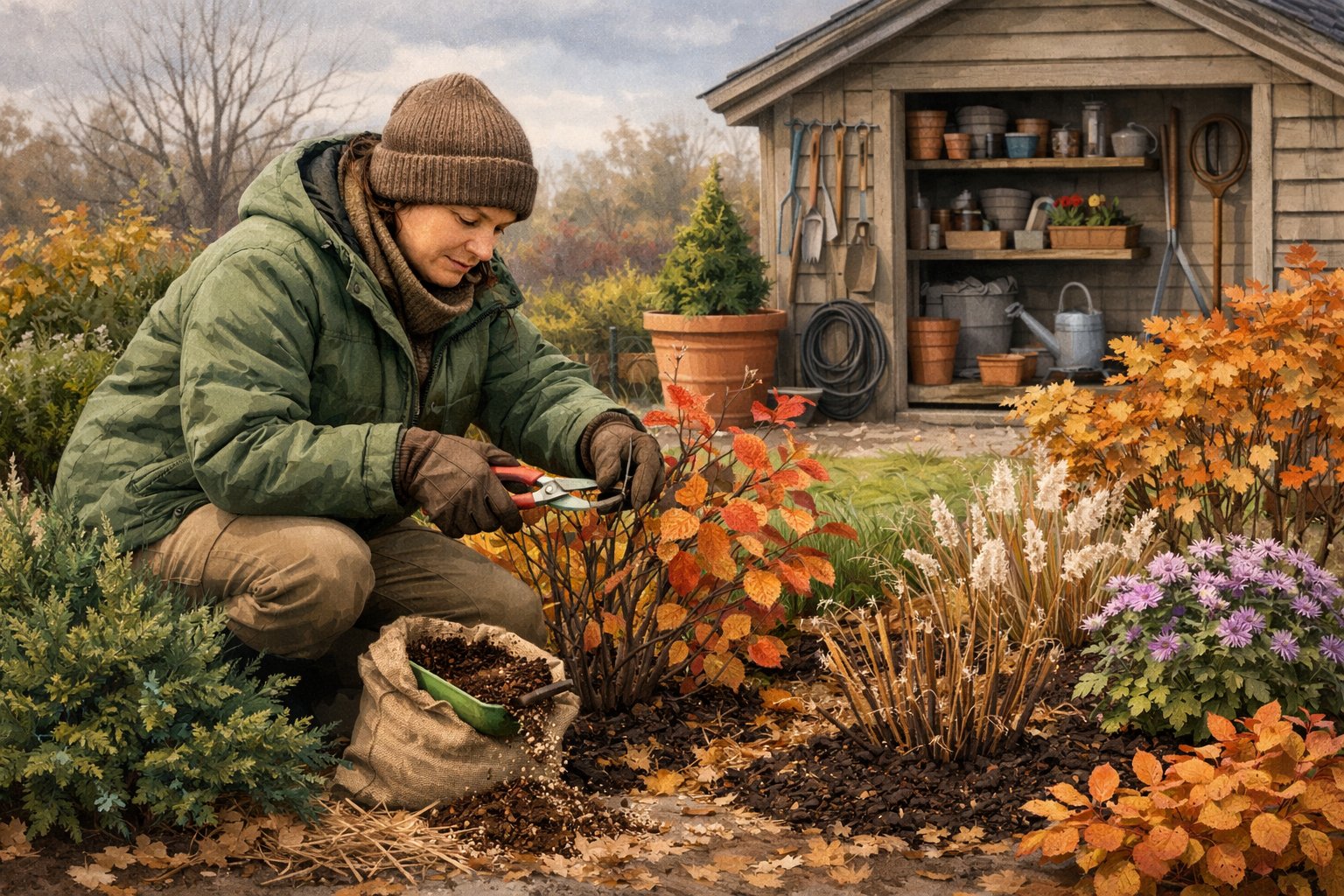
Strong, healthy plants handle winter way better than weak ones. Get your landscape ready for cold by focusing on when to fertilize, how to water, and what to look for during fall checkups.
Proper Fertilization Practices
Stop fertilizing by mid-August, so new growth has time to toughen up before winter. Late growth stays soft and gets zapped by frost.
Feed your plants in spring through mid-August with balanced fertilizers. If a soil test in fall shows you need something, use a low-nitrogen fertilizer that won’t push new leaves. Phosphorus and potassium help roots and cold-hardiness without encouraging soft shoots.
Skip high-nitrogen fertilizers after summer. Plants need to focus on roots and hardening off, not making new leaves. Let them go dormant naturally for best results.
Watering Techniques Before and During Winter
Water deeply in fall before the ground freezes, especially for broadleaf evergreens like rhododendrons and hollies. They lose moisture all winter, so they need a good reserve.
Soak soil to about 12 inches deep, so water reaches below the frost line. During dry winters, check soil moisture every month when temps go above freezing. Plants still lose water on sunny days, even in winter.
Container plants need extra attention. Their roots freeze faster than those in the ground. Water them well before a cold snap and check them regularly through winter.
Ongoing Plant Health Assessments
Check your plants weekly in the fall for disease or pest issues. Remove sick branches right away to prevent problems from lingering until spring.
Watch for these warning signs:
- Leaves with odd colors or spots
- Wilting or drooping that doesn’t improve
- Visible bugs or egg clusters
- Damaged bark or sap oozing out
- Fungal growth on stems or leaves
- Seal up infested plant debris in bags and toss it—don’t compost it.
- Compost healthy debris only.
- Make notes about stressed plants so you can keep an eye on them after winter.
Pruning and Debris Management for Winter Preparation
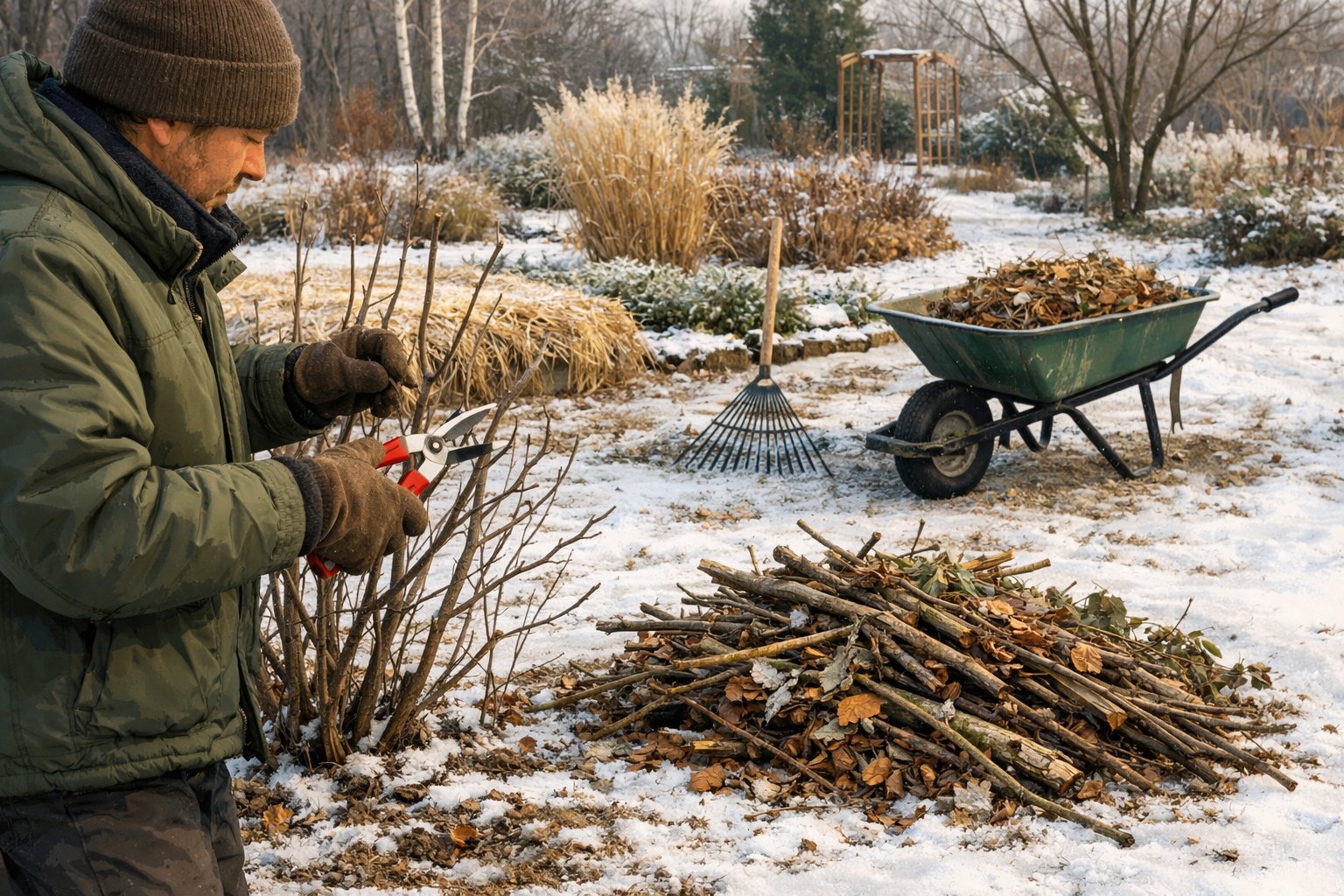
Getting pruning timing right can make a huge difference in winter survival. Careful pruning and smart debris management help keep pests and diseases from hanging around until spring.
Appropriate Pruning Timing
Don’t prune your landscape plants from mid-August until after the first frost. Cutting during this window removes protective tissue and triggers new growth that won’t toughen up before cold weather. That soft growth is the first to die when temperatures drop.
You can take out dead or diseased branches any time during winter. With leaves gone, it’s easier to see the plant’s structure. But if you have flowering shrubs, wait until late winter or early spring to prune—many set their flower buds in fall, and pruning now means no blooms later.
Young trees need a gentle touch in winter. Don’t remove too many limbs, or you’ll weaken the tree. Just take off crossing or damaged branches and leave the rest for later.
Handling Diseased or Dead Material
Remove all diseased plant material from your landscape as soon as you notice it. Infected leaves, branches, and stems can harbor pathogens that survive winter and return in spring.
Cut diseased branches back to healthy wood, making your cut at least 6 inches below any visible damage.
Disinfect your pruning tools between cuts when working with diseased plants. Use a mix of one part bleach to nine parts water, or just use rubbing alcohol if that’s handier.
This step stops you from spreading disease from infected branches to healthy parts of the plant.
Check your plants for signs of pest infestation—egg masses, webbing, or tunneling damage. Remove and destroy any infested parts right away.
Composting and Safe Disposal Practices
Don’t add diseased plant material to your compost pile. Home composters rarely get hot enough to kill off plant pathogens or pest eggs.
Bag up diseased debris and toss it with your regular trash, or burn it if that’s allowed where you live.
Healthy plant trimmings, fallen leaves, and non-diseased debris are fine for composting. Shred bigger branches before adding them to speed things up.
Layer green material (fresh trimmings) with brown material (dry leaves) for a balanced compost pile.
Clear away all debris from around the base of your plants before winter. Fallen leaves and old plant material become cozy hiding spots for rodents and overwintering insects that might harm your plants during the cold months.
Winter Protection Techniques and Barriers
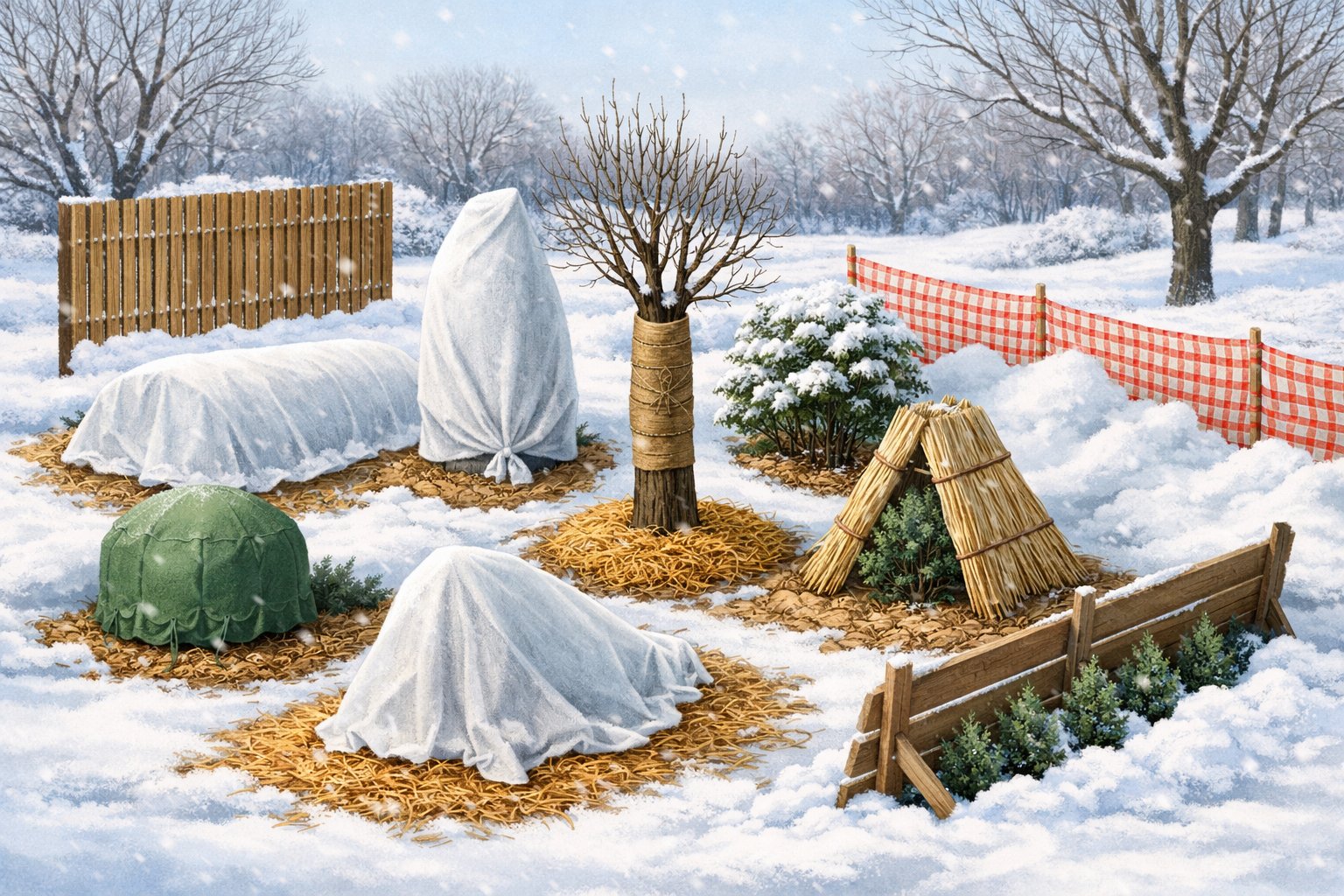
Winter protection usually means three things: mulching to insulate roots, wrapping tree trunks, and setting up barriers to shield plants from harsh winds and weather.
Mulching for Root Insulation
Apply winter mulch after the first killing frost and when the ground starts to freeze. This timing helps keep rodents from nesting in the mulch and stops plants from waking up too early.
Spread a 3-4 inch layer of organic mulch around your plants. Wood chips, shredded bark, pine needles, or straw all work well.
Keep mulch a few inches away from plant stems and tree trunks to avoid rot and disease. Mulch keeps soil temperatures steady, not warm, and helps prevent freeze-thaw cycles that can push plants out of the ground.
For perennials and small shrubs, you can cover the crown with mulch after the ground freezes.
Using Tree Wraps and Guards
Wrap young trees with white tree wrap or guards from the base up to the first branches before winter hits. This helps prevent sunscald—when the winter sun warms bark during the day and freezing temperatures damage it at night.
Start at the bottom and overlap each layer by half as you wind the wrap upward. The wrap should feel snug but not tight.
Take off all wraps in early spring once temperatures stay above freezing to avoid moisture buildup and girdling.
Plastic guards also help protect against animal damage from deer, rabbits, and rodents that chew bark in winter. Place guards around the trunk base and make them high enough—18-24 inches for rabbits, 4-6 feet if deer are a problem.
Creating Temporary Windbreaks
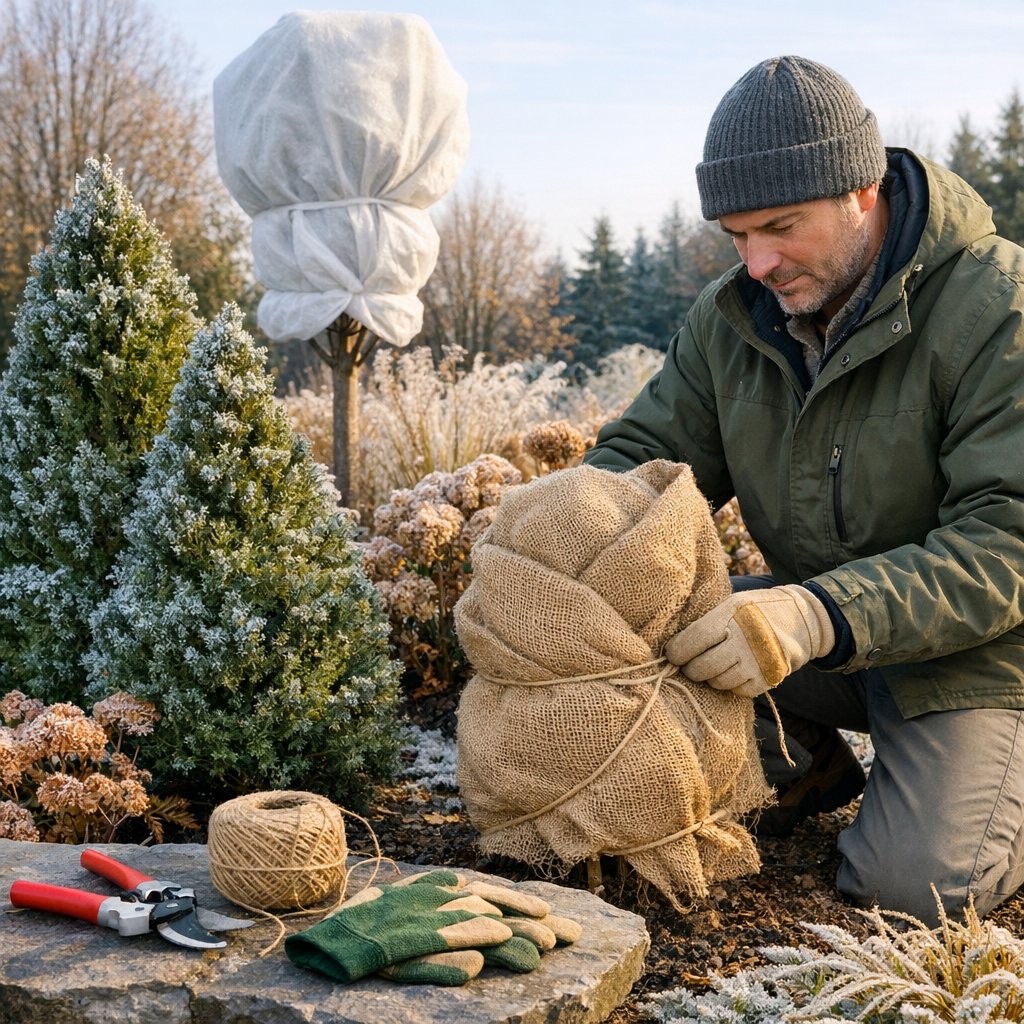
Set up windbreaks around plants that get battered by winter winds, especially broadleaf evergreens and young trees. Burlap screens, snow fencing, or wooden stakes with burlap work well as temporary barriers.
Put the windbreak on the windward side—usually the northwest side for most folks. Place it 2-3 feet away from the plant so air can circulate but the strongest winds are blocked.
The barrier should be taller than the plant you’re protecting. For small shrubs or individual plants, make a three-sided enclosure using stakes and burlap. Leave the top open so moisture can escape and snow doesn’t pile up and break branches.
Remove all barriers in early spring once the worst winds are over.
Protecting Special Plant Types During Cold Weather
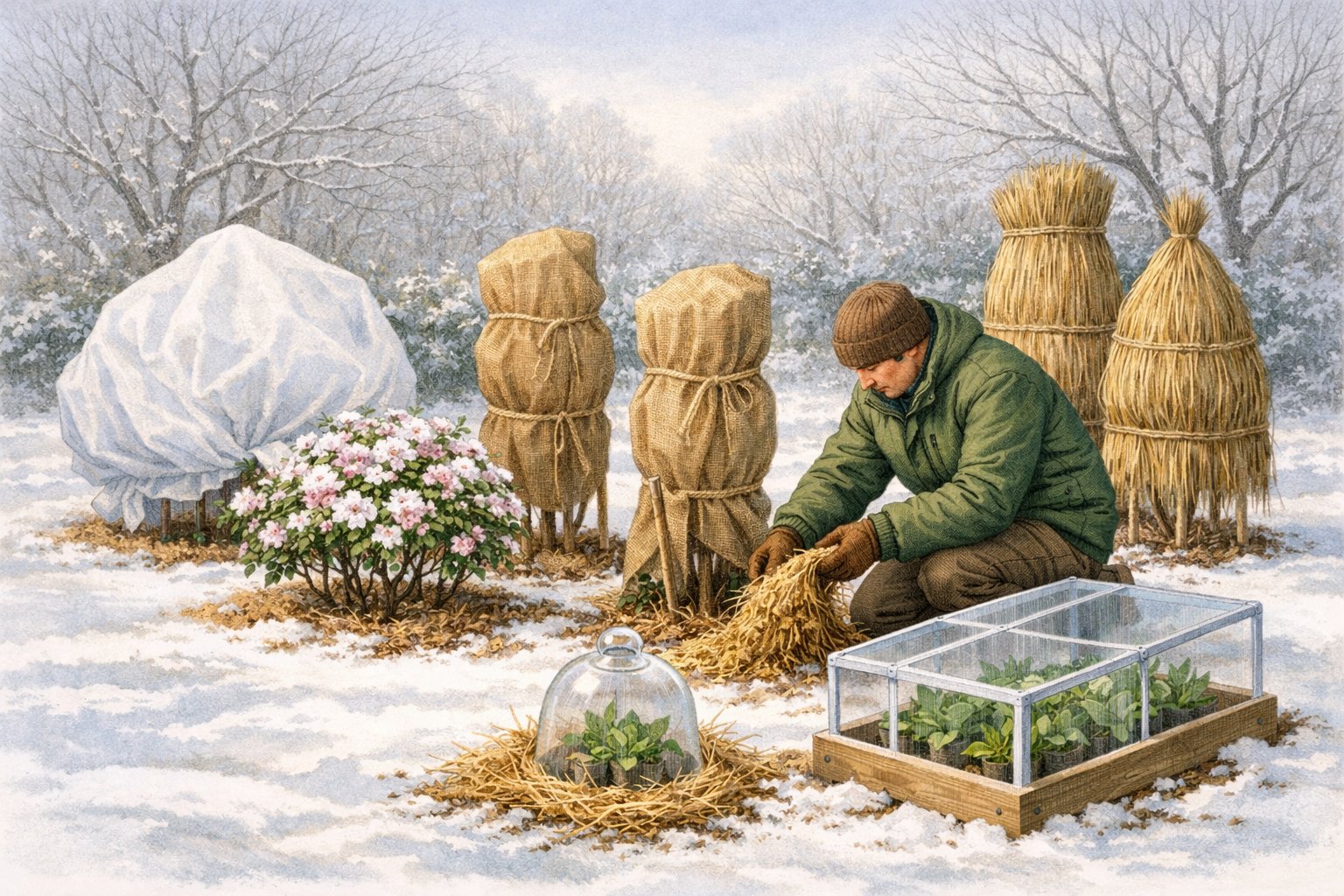
Different plant types face unique winter challenges. Broadleaf evergreens need protection from drying winds, flowering shrubs need to keep their buds safe, and container plants need extra care to protect their roots.
Safeguarding Broadleaf Evergreens
Broadleaf evergreens like rhododendrons, hollies, and boxwoods lose moisture through their leaves all winter. This gets tricky when frozen soil blocks roots from replacing that water.
Anti-desiccant sprays form a thin coating on leaves to slow water loss. Apply these in late fall when it’s above 40°F, and again in mid-winter. You’ll need to reapply after heavy rain or snow.
Set up burlap screens on the windward side of your plants to break up drying winds. Leave the top open for air flow, and avoid wrapping plants in plastic—it traps moisture and can cause disease.
Water broadleaf evergreens deeply before the ground freezes. They need those reserves to get through winter. Water again during thaws if temperatures stay above freezing for a few days.
Care for Flowering Shrubs
Flowering shrubs like hydrangeas, azaleas, and camellias set their buds in late summer and fall. These buds stick around all winter and need protection from deep cold and sudden temperature swings.
Mulch around the base of your flowering shrubs with 3-4 inches of organic material after the first hard frost. This keeps roots insulated and soil temperatures steady.
Keep mulch a couple inches away from stems to prevent rot. For shrubs that are borderline hardy in your area, build a wire cage around the plant and fill it with dry leaves or straw. This insulates without crushing branches.
Take the protection off in early spring before new growth starts. Don’t prune flowering shrubs in fall or early winter—pruning now removes flower buds and can push out new growth that won’t survive freezing temps.
Winter Strategies for Container-Grown Plants
Container-grown plants face more cold because their roots sit above ground. Soil in pots freezes faster and swings in temperature more than ground soil.
Move containers to protected spots like an unheated garage, a covered porch, or up against a south-facing wall. Group containers together so they insulate each other.
Wrap containers in bubble wrap, burlap, or foam insulation to help roots stay warmer. You can also sink pots into the ground up to their rims and pile mulch around them.
Water container plants thoroughly before winter. Check soil moisture every month and water during mild spells if needed. Even when dormant, plants lose moisture through transpiration.
For pots that must stay outdoors, use frost-resistant materials like fiberglass, wood, or thick plastic. Terracotta and ceramic pots tend to crack if water inside freezes and expands.
Monitoring and Caring for Plants After Winter
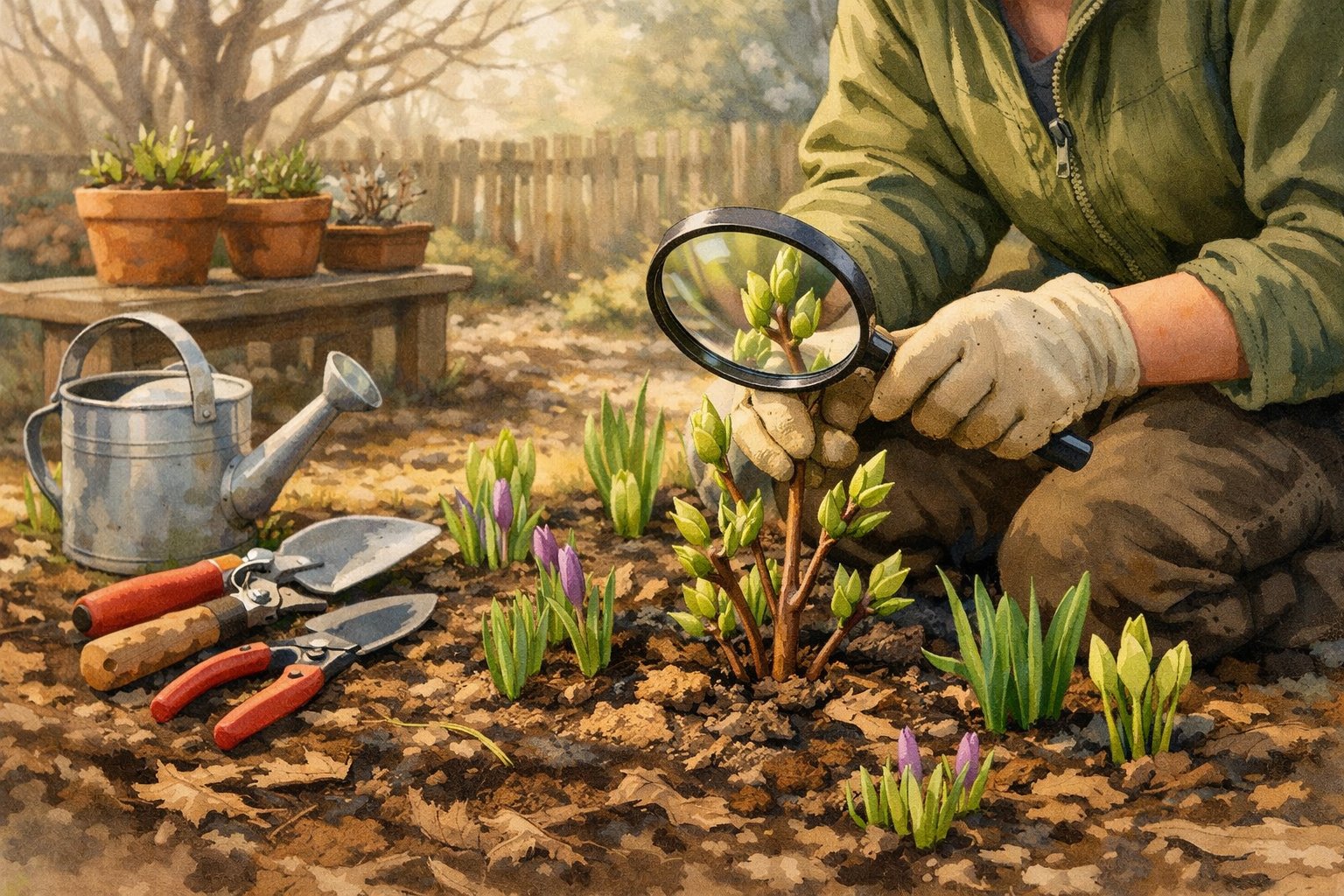
Winter damage doesn’t always show up right away. As temperatures warm, keep a close eye on your plants and help them recover with the right care.
Different plant types need their own approach—sometimes it’s as simple as removing dead tissue, sometimes you need to tweak your routine to support new growth.
Assessing and Treating Winter Damage
Wait until mid to late spring before making final calls about winter damage. Many plants that look dead may still have living tissue below ground or tucked away in protected spots.
Check for life by gently scratching bark with your thumbnail. Green underneath means the branch is alive; brown or gray means it’s dead. Start at the tips and work toward the trunk.
Look for these common types of damage:
-
- Browning evergreen foliage from drying or freeze damage
-
- Split or cracked bark on trunks and big branches
-
- Broken limbs from ice or snow weight
-
- Root heaving where soil freezing pushed plants up
-
- Discolored or mushy stems—a sign of frost damage
Water damaged plants deeply once the ground thaws. This helps roots bounce back and supports new growth.
Use a balanced fertilizer at half strength in early spring to give stressed plants a gentle nudge without overdoing it.
Seasonal Pruning Following Cold Stress
Cut off obviously dead, broken, or diseased branches as soon as you spot them. Make clean cuts just above healthy buds or branch collars to help the plant heal well.
Hold off on pruning questionable branches until buds break and new growth starts—usually April or May, depending on where you live. If you prune too early, you might cut off branches that could still recover.
Follow these pruning tips:
-
- Cut back to the nearest healthy bud or branch junction
-
- Don’t remove more than a third of the plant at once
-
- Sterilize pruning tools between cuts on diseased plants
-
- Hold off on shaping or heavy pruning until plants show strong new growth
For young trees, resist the urge to strip off damaged bark or wrap injuries. Trees seal wounds naturally, and interfering often does more harm than good.
Recovery Approaches for Different Plant Types
Narrowleaf evergreens like pines and spruces rarely recover from browned needles. Wait for new growth to see which branches are still alive, then remove any that are completely brown.
Broadleaf evergreens such as rhododendrons and hollies often look worse than they are. Pick off brown leaves but leave stems—new leaves usually pop out from dormant buds by early summer if the stems made it.
Flowering shrubs may lose their flower buds to cold, but the plants usually bounce back. Prune dead wood after bloom time so you don’t accidentally cut off viable buds.
Perennials need a bit of patience. Leave last year’s foliage until new shoots emerge from the crown. Cut back dead stems only after you see which parts survived—some perennials take weeks longer than usual to show up after a tough winter.
Long-Term Strategies to Prevent Future Winter Damage
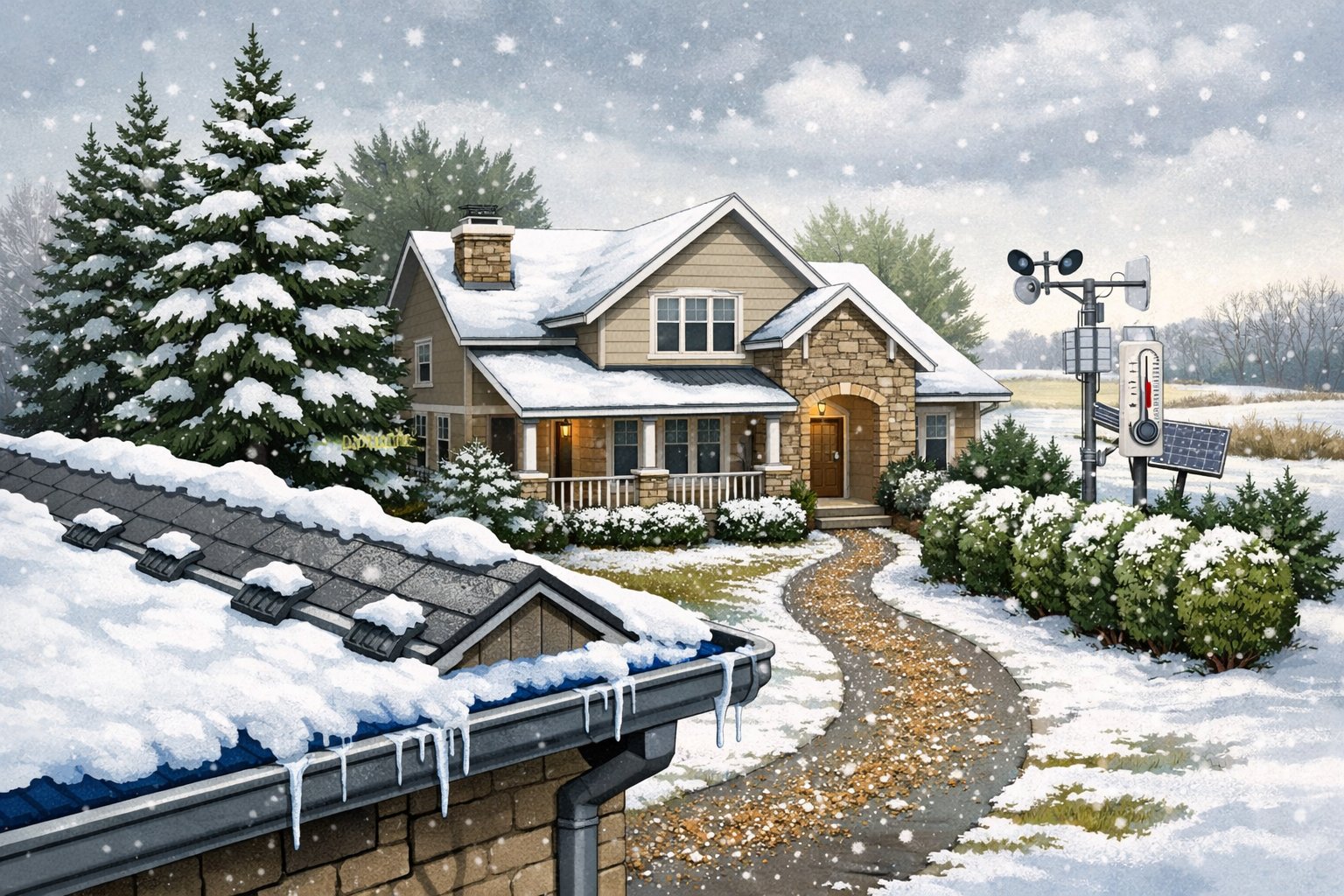
Protecting your landscape plants takes more than a one-season fix. Build a regular maintenance routine, look up research-backed info, and keep tweaking your plant choices.
Over time, you’ll create a resilient landscape that can handle winter’s curveballs year after year.
Annual Maintenance Schedules
Making a yearly calendar helps you tackle important tasks at the right time. Mark down dates for fertilizing, watering, and mulching based on when your region usually gets its first frost.
Start in early spring with fertilizer for plants that are waking up. Keep feeding until about mid-August, then stop so your plants can toughen up before winter hits.
Set aside time for deep watering in late fall, especially before the ground freezes. This way, roots can soak up moisture that’ll last through the cold months.
Plan to apply mulch after the first killing frost in your area. Pick a spring date to take off tree wraps and winter barriers before things warm up, since leaving them on too long can actually harm trees.
Jot down what goes well and what doesn’t each year. If you notice certain plants struggling or thriving, make a note.
Keep track of weird weather or any damage you spot. You’ll be able to tweak your schedule and avoid repeating the same mistakes next year.
Integrating Reliable Research from .gov and .edu Sources
Government and university research offers solid, tested ways to protect your plants in winter. The USDA Hardiness Zone Map at planthardiness.ars.usda.gov gives you updated info for your exact area.
Check that your plants actually match your climate zone. Land-grant universities have extension guides tailored to your state, with advice on plant varieties, timing, and local pests.
Your state university’s extension site is packed with free publications about winter plant care. The National Weather Service at weather.gov shares winter forecasts and climate history, which helps you guess when extreme cold might arrive.
Their winter hazard resources can help you get ready for sudden freezes. Research from these sources does change as scientists learn more, so it’s worth checking for updates every few years.
Continued Plant Selection Improvements
Your landscape should change as you figure out which plants actually do well in your yard. Swap out anything that keeps getting winter damage for tougher options that fit your USDA zone.
Pay attention to microclimates around your place. South-facing spots tend to get more freeze-thaw cycles than the north side, which can make a big difference.
If a plant’s having a hard time, try moving it somewhere more sheltered or replace it with something built for those conditions. Look for new cultivars bred for better cold hardiness—plant breeders are always coming up with improved varieties.
When you need a replacement, see if there’s a newer, hardier version of that species. Test new plants in small numbers first. Buy just one or two, see how they handle winter, and only then consider planting more.
This way, you’ll avoid expensive mistakes and slowly build a list of plants that really work for your property.
Benefits of Comprehensive Winter Plant Protection
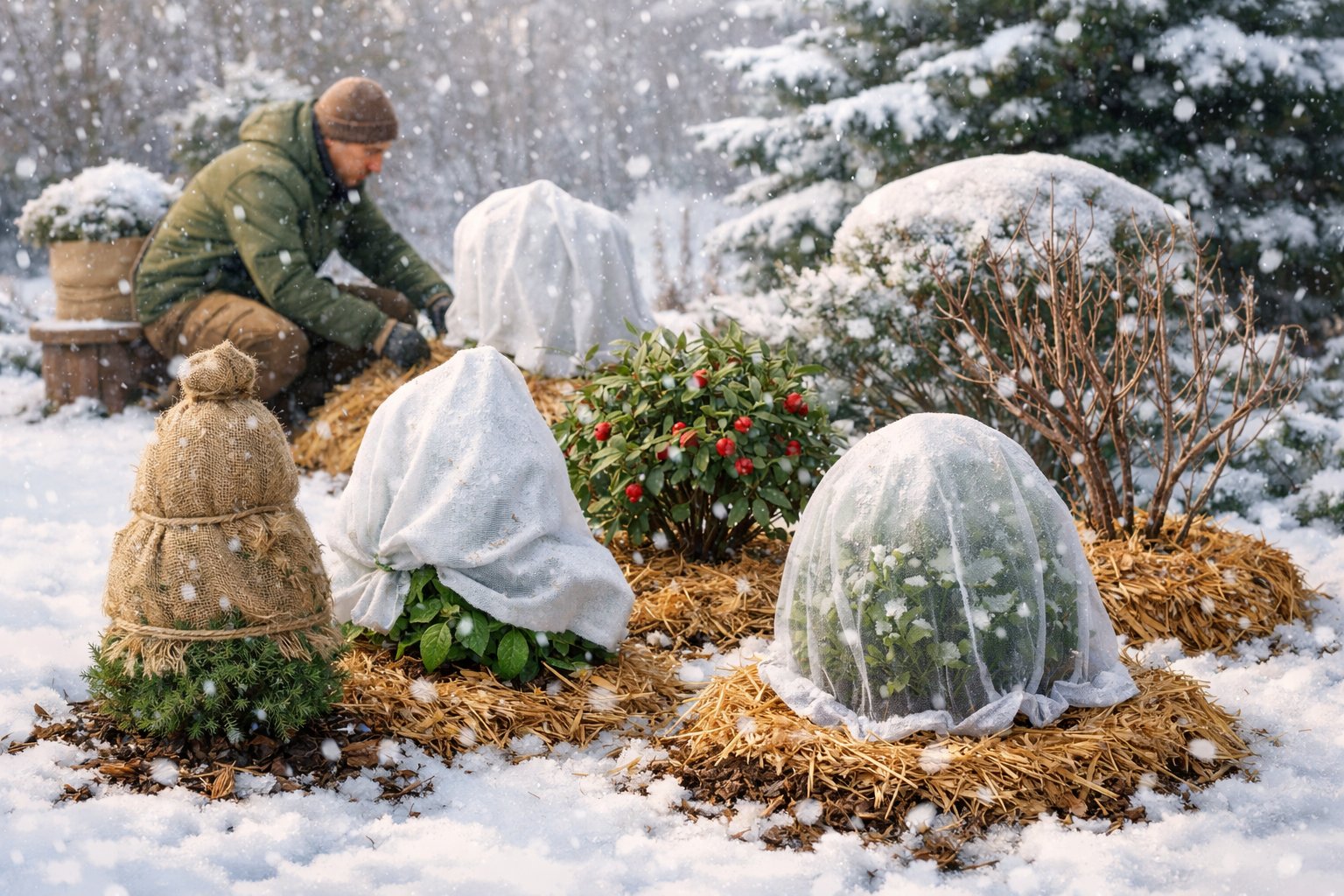
Protecting your landscape plants during winter pays off with fewer replacements, stronger plant health, and steady property value. The benefits don’t just last one season—they stick around for the long haul.
Preserving Landscape Investments
Your landscape is a big investment, and winter damage can wipe out years of growth. Mature trees and shrubs aren’t cheap to replace, and they take time to recover.
Winter protection helps you keep the value you’ve built into your property. A well-protected yard keeps its good looks and continues giving you shade, privacy, and curb appeal.
Research from extension offices even shows mature landscaping can bump property values up by 10-15%. Plants that make it through winter intact keep their shape and beauty, so you don’t end up with awkward gaps or bare patches.
Your yard stays cohesive and keeps working as designed, with less need for big fixes or replacements.
Enhancing Plant Longevity and Health
Good winter protection helps plants grow stronger year after year. When they avoid winter stress, they can focus on growing and flowering, not just recovering.
Protected plants send roots deeper and build tougher branches. They’re less likely to get hit by pests and diseases that love stressed-out plants.
You’ll see better drought tolerance, more energy, and overall healthier growth in the warmer months. Come spring, protected plants often leaf out earlier and bloom more.
Broadleaf evergreens keep their color without turning brown or dropping leaves. Trees and shrubs hold their natural shape, without the weird growth that comes from bouncing back after winter injury.
Minimizing Costly Replacements
Winter damage can hit your wallet hard, and it’s the sort of thing you might not see coming. One brutal cold snap can wipe out plants worth thousands, leaving you scrambling to fix your landscape.
It’s not just about the price of a new plant, either. You’ll shell out for removing dead ones, fixing up the soil, putting in replacements, and then waiting—sometimes for years—for those new plants to actually look good.
If you need a pro to install a new tree or a big shrub, brace yourself. That can run anywhere from $300 to over $1,000 for just one plant.
When you protect your plants up front, you can pretty much skip all that drama. You won’t need emergency tree services swooping in and charging extra for winter cleanup.
Honestly, it’s just less stress. Your maintenance budget stays steady, and you avoid those nasty surprises when it comes time to restore your landscape.