Summer gardens face two major challenges that can make or break your growing season: getting water right and keeping pests under control.
Your plants need consistent moisture during hot months, and understanding how to water properly while managing common summer pests will determine whether your garden thrives or struggles.
Most gardeners water too much or too little. Many folks don’t catch pest problems until serious damage occurs.
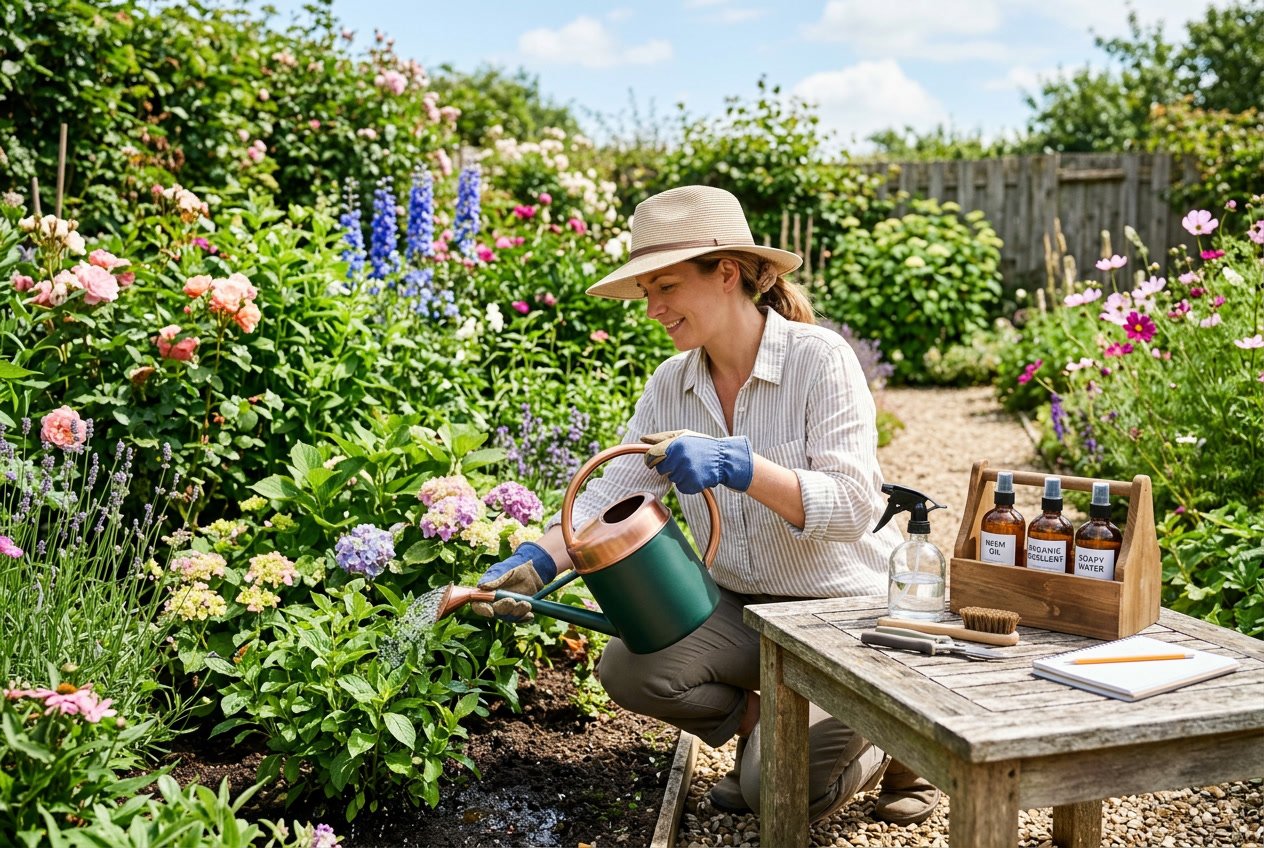
This guide covers practical watering schedules tailored to your specific climate zone and proven pest management strategies.
You’ll learn how to adjust your care routine based on where you live, what you grow, and the conditions you face.
The information includes research-backed methods, real data about plant needs, and straightforward solutions you can start using today.
Whether you grow vegetables, flowers, or both, summer care requires a clear plan.
The coming sections break down exactly when to water, how much to use, which pests to watch for, and what tools make the work easier.
You’ll also find guidance on adapting these methods to your local conditions and avoiding common mistakes that waste time and water.
Understanding Your Summer Garden’s Unique Needs
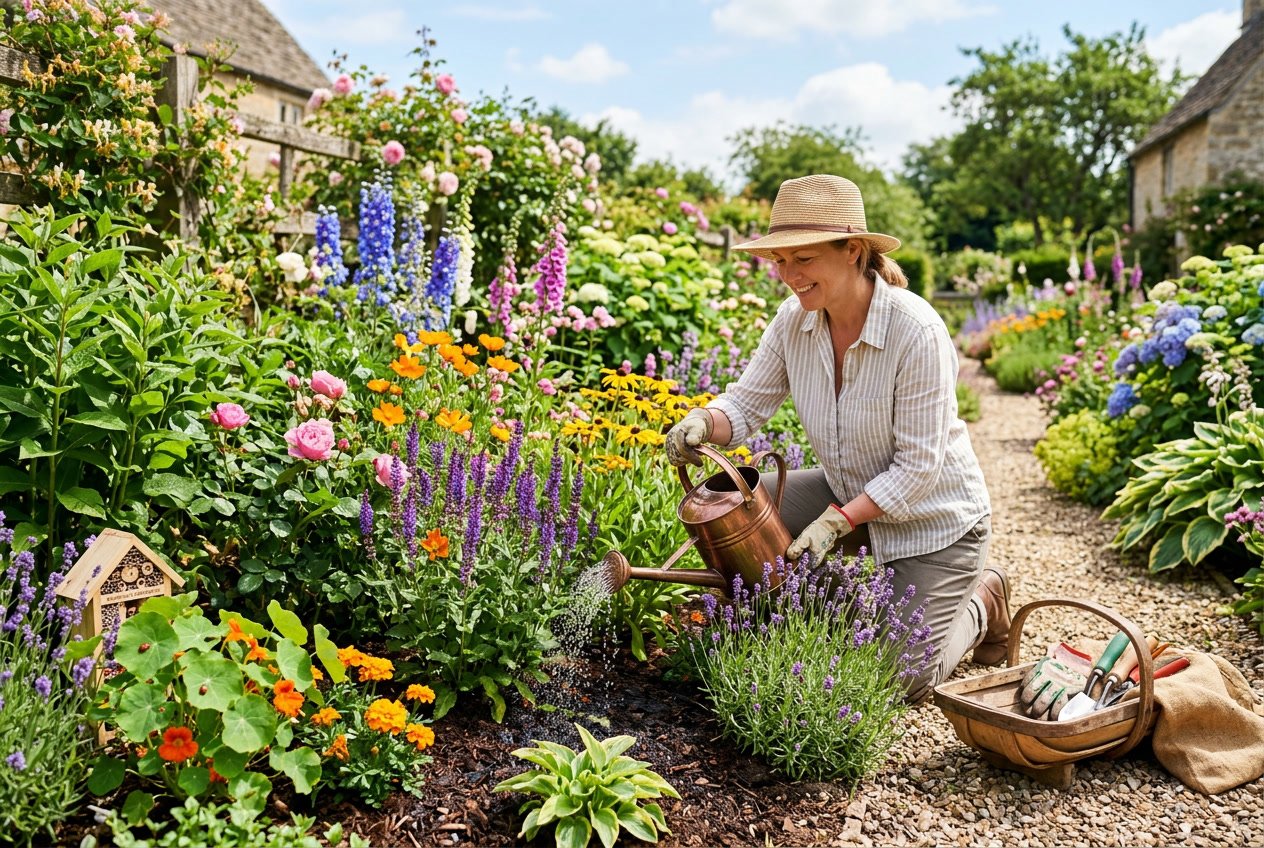
Summer gardens face distinct challenges based on where you live and how plants respond to heat.
Your success depends on knowing your specific climate zone and recognizing when plants show signs of stress.
Assessing Local Climate Zones for Optimal Summer Care
Your USDA hardiness zone tells you which plants survive winter.
Summer care requires understanding heat zones, too.
The American Horticultural Society heat zone map divides the country into 12 zones based on the average number of days above 86°F.
Zone-Based Summer Watering Needs:
-
- Zones 1-3 (Northern states): Water deeply twice per week during dry spells
-
- Zones 4-6 (Midwest and Mid-Atlantic): Water every other day in peak heat
-
- Zones 7-9 (Southern states): Daily watering may be necessary for container plants
-
- Zones 10-12 (Deep South and Southwest): Morning and evening watering is often required
Your soil type matters as much as your zone.
Sandy soil drains quickly and needs more frequent watering.
Clay soil holds water longer but can become waterlogged.
Add a 2-3 inch layer of mulch to help all soil types retain moisture.
Check your local extension office website for exact climate data.
They usually provide monthly rainfall averages and heat predictions specific to your county.
Identifying Common Summer Stress Factors in Plants
Plants show clear signs when summer conditions overwhelm them.
If you recognize these signals early, you can adjust care before permanent damage sets in.
Heat Stress Indicators:
-
- Wilting during midday, even with moist soil
-
- Leaf edges are turning brown or crispy
-
- Flowers dropping before setting fruit
-
- Slowed or stopped growth despite adequate water
Water Stress Warning Signs:
-
- Leaves turning yellow from the bottom up
-
- Soil pulling away from container edges
-
- Drooping that doesn’t recover after watering
-
- Fruit splitting or cracking
Common Pest Pressure Points:
Aphids, spider mites, and whiteflies multiply rapidly in temperatures between 80-90°F.
Check the undersides of leaves weekly.
Japanese beetles peak in July across most zones.
Tomato hornworms show up when nighttime temperatures stay above 60°F.
Your plants need different care on 95°F days versus 75°F days.
Adjust your schedule based on actual conditions, not just calendar dates—trust me, your garden will thank you.
Establishing an Effective Summer Watering Schedule
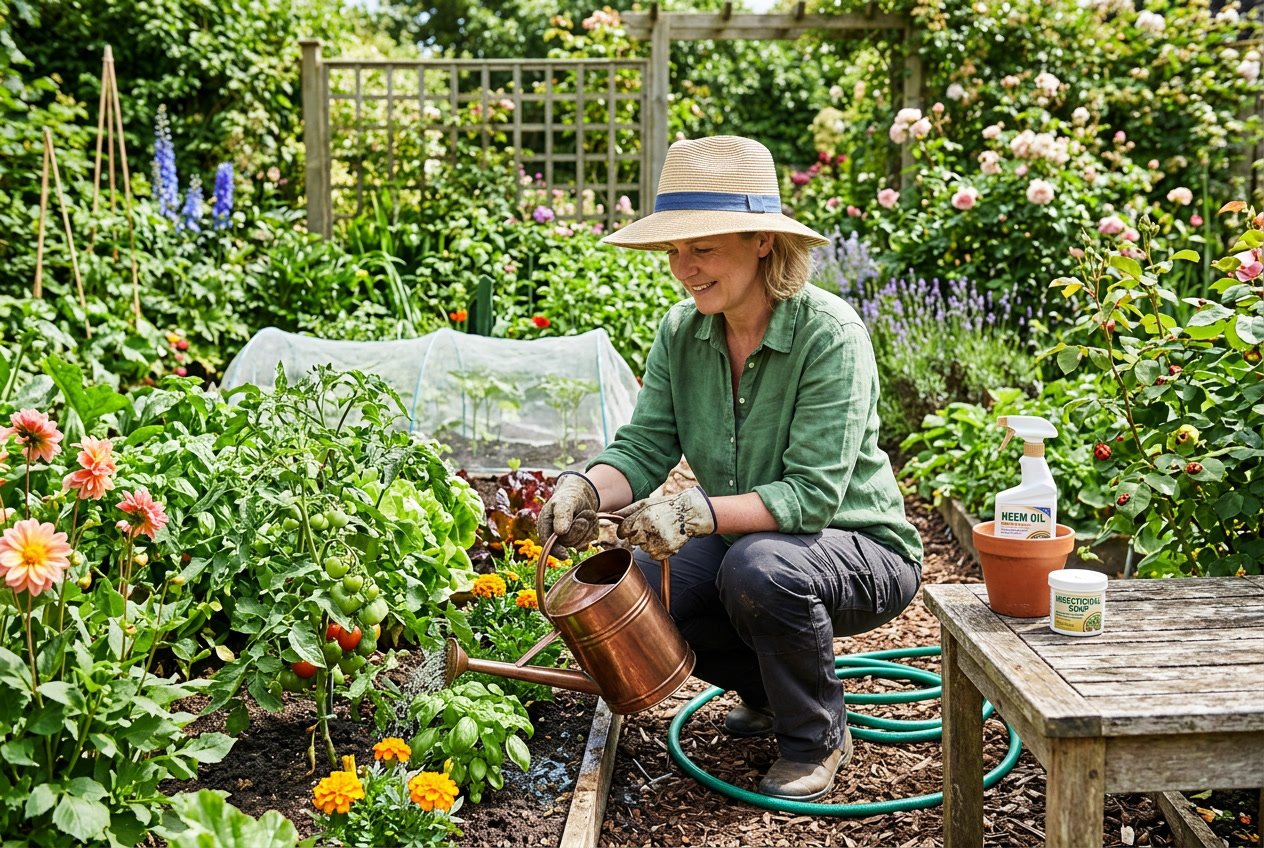
Summer watering success depends on three critical factors: when you water, how deeply you water, and which irrigation methods you use.
These elements work together to keep your plants healthy while conserving water during the hottest months.
Timing and Frequency: Watering Strategies for Different Plant Types
Early-morning watering between 5 AM and 9 AM gives your plants the best chance to absorb moisture before the heat causes evaporation.
This timing helps foliage dry quickly and reduces disease risks.
Container plants need daily watering in summer, sometimes even twice daily during heat waves above 90°F.
Check soil moisture by sticking your finger one inch deep; if it feels dry, water thoroughly until liquid drains from the bottom.
Vegetable gardens require 1 to 2 inches of water per week.
Tomatoes, peppers, and cucumbers need consistent moisture for proper fruit development.
Water deeply 2-3 times weekly instead of light daily watering.
Established perennials and shrubs usually need watering once or twice weekly.
Newly planted specimens require more frequent watering (every 2-3 days) for the first growing season.
Lawns benefit from 1 inch of water weekly, applied in one or two deep soaking sessions.
Place a rain gauge, or even an empty tuna can, on your lawn to measure rainfall.
Different plant types have unique needs:
-
- Succulents and drought-tolerant plants: Water every 7-10 days
-
- Annuals and flowering plants: Water every 1-2 days
-
- Trees: Deep watering every 7-14 days, depending on size and age
Deep vs. Surface Watering: What’s Best for Summer Survival?
Deep watering encourages roots to grow downward, creating stronger plants that handle drought better.
Surface watering keeps roots shallow and vulnerable to heat stress.
Apply water slowly so it penetrates 6-8 inches into the soil for most plants.
For trees and shrubs, aim for 12-18 inches of penetration.
Use a soil probe or long screwdriver to check depth—it should slide easily through moist soil.
Signs you’re watering too shallowly:
-
- Wilting plants even after recent watering
-
- Visible roots at the soil surface
-
- Rapid soil drying (within 24 hours)
-
- Poor plant growth despite regular watering
One deep watering session beats three shallow ones.
A deep soak might take 30-45 minutes per zone with a soaker hose or sprinkler.
This approach trains roots to seek moisture deeper in the ground, where temperatures stay cooler and water sticks around longer.
Water until you see slight runoff, then stop for 30 minutes to let it soak in.
Resume watering to reach your target depth—especially helpful for clay soils that absorb water slowly.
Efficient Irrigation Techniques: Drip Systems and Mulching
Drip irrigation delivers water directly to plant roots with about 90% efficiency, compared to 50-70% for traditional sprinklers.
These systems reduce water waste and keep foliage dry, which helps prevent fungal diseases.
Basic drip system components:
-
- Main line tubing (½ or ¾ inch)
-
- Emitters or drip tape (delivers water at specific rates)
-
- Pressure regulator (maintains 15-25 PSI)
-
- Timer for automation
Install emitters 12-18 inches apart for vegetables and flowers.
For trees and shrubs, create a ring of emitters around the drip line (the outer edge of the canopy).
Run your system for 30-60 minutes, 2-3 times weekly.
Soaker hoses offer a budget-friendly alternative.
These porous hoses weep water along their entire length.
Place them 12-18 inches apart in garden beds and cover with mulch.
Mulch benefits for summer watering:
-
- Reduces soil temperature by 10-15°F
-
- Decreases evaporation by up to 70%
-
- Keeps moisture consistent around roots
-
- Suppresses weeds that compete for water
Apply 2-3 inches of organic mulch, such as wood chips, shredded bark, or straw, around plants.
Keep mulch 2-3 inches away from plant stems and tree trunks to prevent rot.
Refresh mulch mid-summer as it breaks down.
Seasonal Pest Management Tips for Healthy Gardens
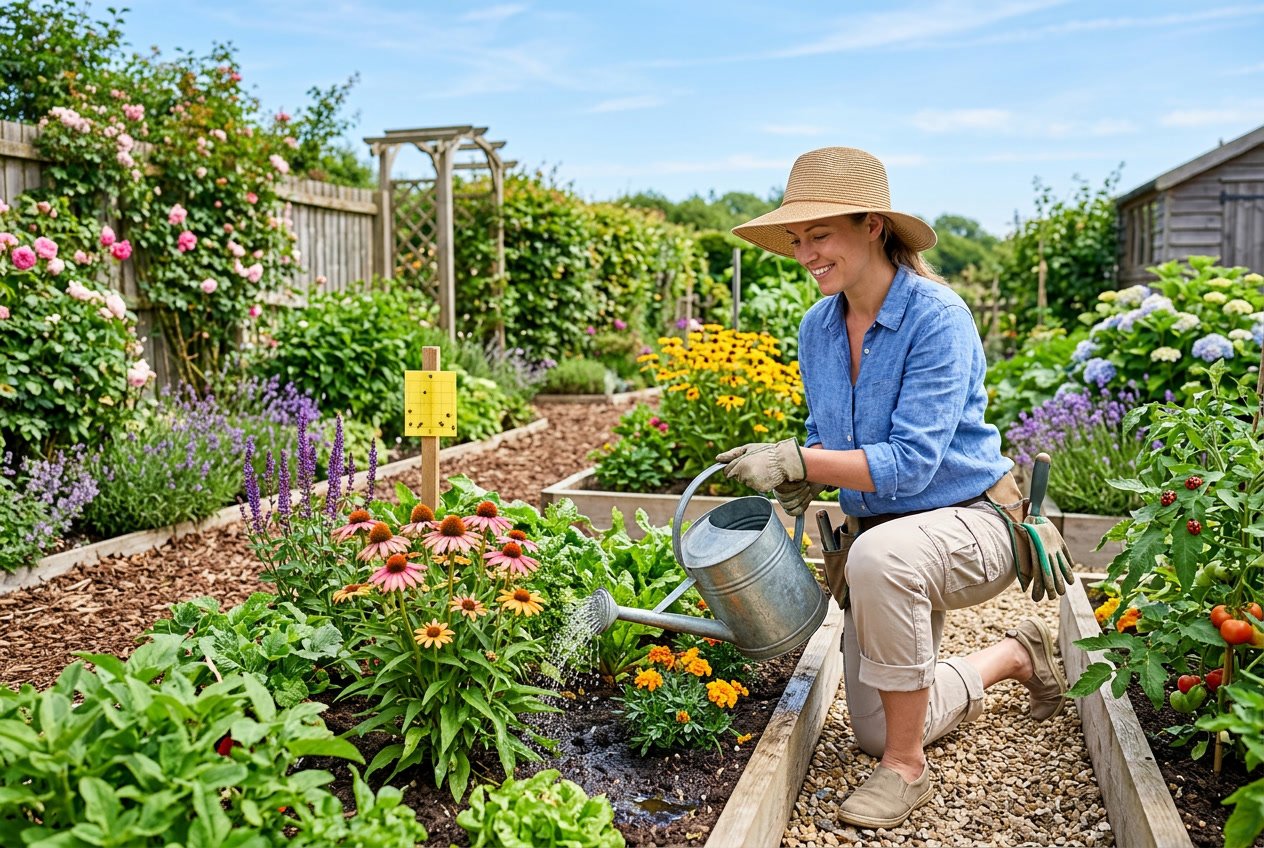
Summer pests can damage your garden quickly if you don’t act fast.
The key is to identify threats early, use safe control methods, and combine prevention with active treatment when problems appear.
Recognizing Common Summer Pests in Your Region
Your location determines which pests will attack your garden during the summer months.
In the northern states, Japanese beetles typically emerge in late June and feed on roses, grapes, and fruit trees.
Southern gardeners face different challenges, as whiteflies and spider mites thrive in hot, humid conditions.
Check your plants every morning before temperatures rise.
Look under leaves where many pests hide during the day.
Aphids cluster on new growth and leave sticky honeydew behind.
Tomato hornworms can strip a plant in days, but blend into foliage with their green color.
Cabbage loopers and squash bugs become active when temperatures consistently stay above 70°F.
Watch for small holes in leaves, chewed edges, or wilting stems.
Flea beetles create tiny, round holes that look like buckshot damage.
Your USDA hardiness zone affects pest timing, too.
Zone 7 gardeners might see cucumber beetles in early June, while Zone 4 gardeners won’t face them until mid-July.
Track which pests appear each year in a garden journal to predict future problems.
Natural and Organic Pest Control Methods
Hand-picking works well for larger pests like hornworms, beetles, and caterpillars.
Drop them into soapy water to kill them quickly.
Do this in the early morning when insects move slowly.
Spray solutions you can make at home:
-
- Neem oil mixed with water disrupts insect feeding and reproduction
-
- Insecticidal soap kills soft-bodied pests on contact
-
- Garlic spray repels many chewing insects
-
- Hot pepper spray deters aphids and beetles
Beneficial insects provide free pest control all season.
Ladybugs eat up to 50 aphids per day.
Lacewing larvae consume thrips, mites, and small caterpillars.
Plant dill, fennel, and yarrow to attract these helpers to your garden.
Diatomaceous earth creates a barrier that cuts through insect exoskeletons.
Sprinkle it around plant bases and reapply after rain.
Row covers physically block pests from reaching crops, but must allow pollinators access to flowering plants.
Integrated Pest Management: Combining Preventive and Responsive Strategies
IPM combines several tactics to achieve better results than using a single method. Start with prevention—pick disease-resistant varieties and give your plants plenty of space for air flow.
Healthy plants withstand pests much better than stressed ones. That’s a truth I’ve seen play out season after season.
Check your garden at least three times per week during peak summer. Track pest numbers on a few sample plants so you notice changes before things get out of hand.
Set action thresholds based on actual damage, not just the sight of a bug or two. A couple of aphids on mature tomatoes? No big deal. Hundreds? Time to step in.
Switch up your control methods to keep pests guessing and avoid resistance. Maybe hand-pick bugs one week, then spray neem oil the next.
Save chemical sprays for the worst infestations only. Trust me, you don’t want to reach for those unless you really have to.
Remove damaged plant bits right away—they attract more pests. Pick up fallen fruit and veggies every day if you can.
Pull weeds near your garden beds, as they often harbor pests. Water in the morning so leaves dry fast, and you don’t invite fungal issues that make pest problems worse.
Choosing the Right Gardening Tools and Resources
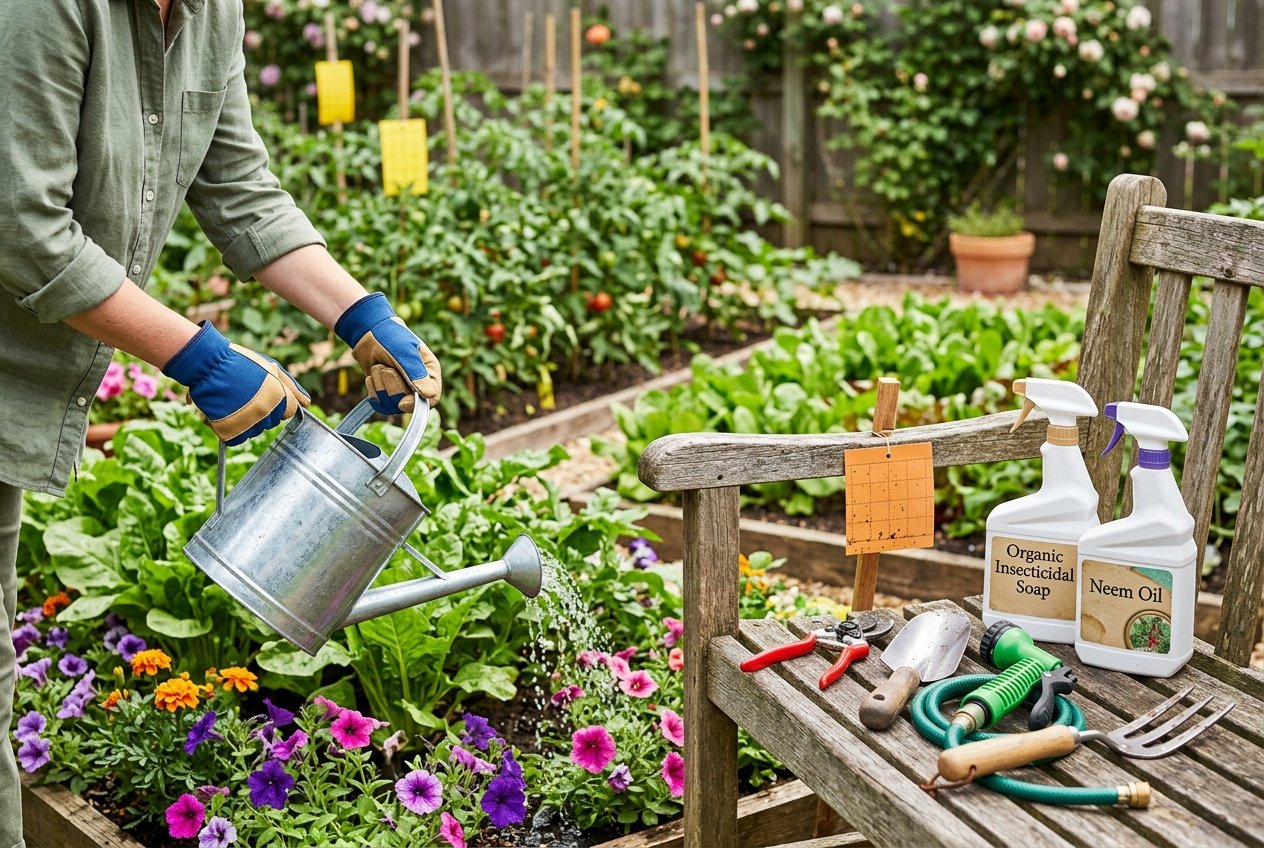
Your summer garden’s success really comes down to having the right watering equipment and picking plants that can handle heat and pests. You’ll want good advice and tools that don’t quit when it gets hot.
Recommended Tools for Summer Watering
A soaker hose delivers water right to the roots and cuts evaporation by up to 70% compared to overhead sprinklers. I usually lay mine under mulch in veggie beds and around shrubs.
Drip irrigation systems keep soil moist and save you loads of time when it’s blazing outside. Hook them up to automatic timers to water early—think 5 to 9 AM. That way, you fight off fungal diseases and don’t waste water.
A watering wand with an adjustable nozzle lets you water your containers and seedlings. Look for wands 16 to 30 inches long so you don’t have to crouch and wreck your back.
Rain gauges show you how much rain your garden actually gets. Stick them in an open spot away from trees for the best reading. Most plants want about 1 to 1.5 inches of water a week in summer.
Moisture meters take the guesswork out of watering. Just poke the probe 2 to 4 inches into the soil near the roots and check before you haul out the hose.
Plant Selections for Heat and Pest Resistance
Heat-loving vegetables like okra, eggplant, and cherry tomatoes thrive in temperatures above 85°F. Once they’re established, you don’t have to water them as often, and they shrug off most summer pests.
Herbs like rosemary, oregano, and thyme naturally repel aphids and whiteflies. Plus, they’re tough as nails in drought. I always tuck them near veggies that seem to attract trouble.
Native perennials made for your USDA zone need less water and don’t get hammered by local pests. Black-eyed Susans, coneflowers, and bee balm attract pollinators and require little pest management.
Marigolds give off compounds that drive away nematodes, aphids, and even mosquitoes. Plant them along your veggie garden’s edges or between rows. French marigolds seem to work best for pest control.
Zinnias and sunflowers pull in ladybugs and lacewings—nature’s little pest eaters. These flowers handle heat and need water only once or twice a week after they settle in.
Where to Find Trusted Gardening Advice and Products
Your local Cooperative Extension Service (usually through a state university) hands out free, science-backed info for your county. Agents offer soil tests, pest IDs, and planting guides that actually fit your climate.
The USDA Plant Hardiness Zone Map at planthardiness.ars.usda.gov helps you pick plants that’ll survive your winters and summers. It’s updated with real climate data and gives you specific temperature ranges.
Independent garden centers usually have staff who know the quirks of your area. They stock plants and products that actually work where you live—and they’ve seen every pest problem in the book.
University extension websites ending in .edu are goldmines for watering tips and IPM info. You’ll find fact sheets, videos, and printable calendars for seasonal care.
Online gardening retailers list detailed specs and real customer reviews. Compare things like GPH (gallons per hour) for irrigation and warranty terms before you buy.
Data-Driven Insights: Research and Statistics for Summer Care
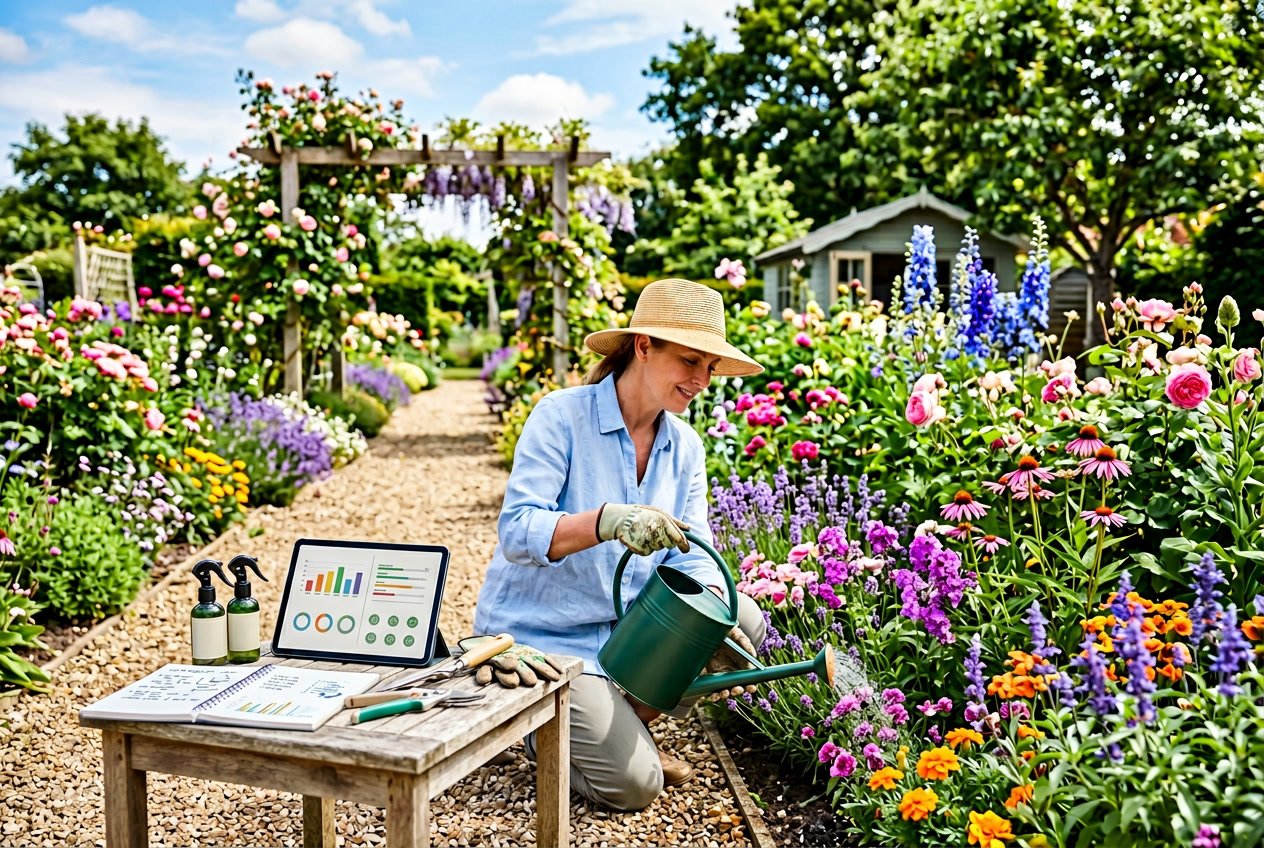
Real research on water use and pest activity can actually make your garden life easier. Some of these stats might surprise you—or at least make you rethink your routine.
Recent Studies on Water Conservation in Home Gardens
The University of California found that most home gardens use 30-60% more water than needed in summer. A lot of folks water daily when 2-3 times a week is plenty for established plants.
Colorado State University’s 2024 study says drip irrigation cuts water use by 40-50% compared to sprinklers. Drip lines deliver water directly to the roots and minimize waste.
Research from Texas A&M shows that soil moisture sensors can reduce water use by 35%. These gadgets measure what’s really happening in the soil instead of guessing.
Key Water Conservation Facts:
-
- Watering early (5-9 AM) loses 25% less water than afternoon watering
-
- Mulch cuts water needs by 20-30%
-
- Deep watering once a week beats shallow daily watering for strong roots
-
- Container plants need daily watering, but in-ground plants do better with less frequent, deep drinks
Pest Population Trends and Effective Intervention Rates
USDA data show aphid populations explode in July and August when temperatures hit 80-85°F. Spider mites go wild—up 200%—during heat waves above 90°F.
Penn State studies show that companion planting can reduce pest problems by 20-34%. Marigolds next to tomatoes? Aphids drop by 40%.
Integrated Pest Management (IPM) methods work about 65% of the time without chemicals. Hand-picking larger pests solves 80% of beetle issues in small gardens.
Proven Intervention Success Rates:
-
- Neem oil spray: 70-75% effective on soft-bodied bugs
-
- Insecticidal soap: 60-65% fewer aphids
-
- Beneficial insects: 50-60% pest control over 4-6 weeks
-
- Row covers: 90% block for flying pests
Weather matters a lot. Warm winters mean pests show up 2-3 weeks earlier than usual.
Personalizing Your Summer Care Routine by Local Zone
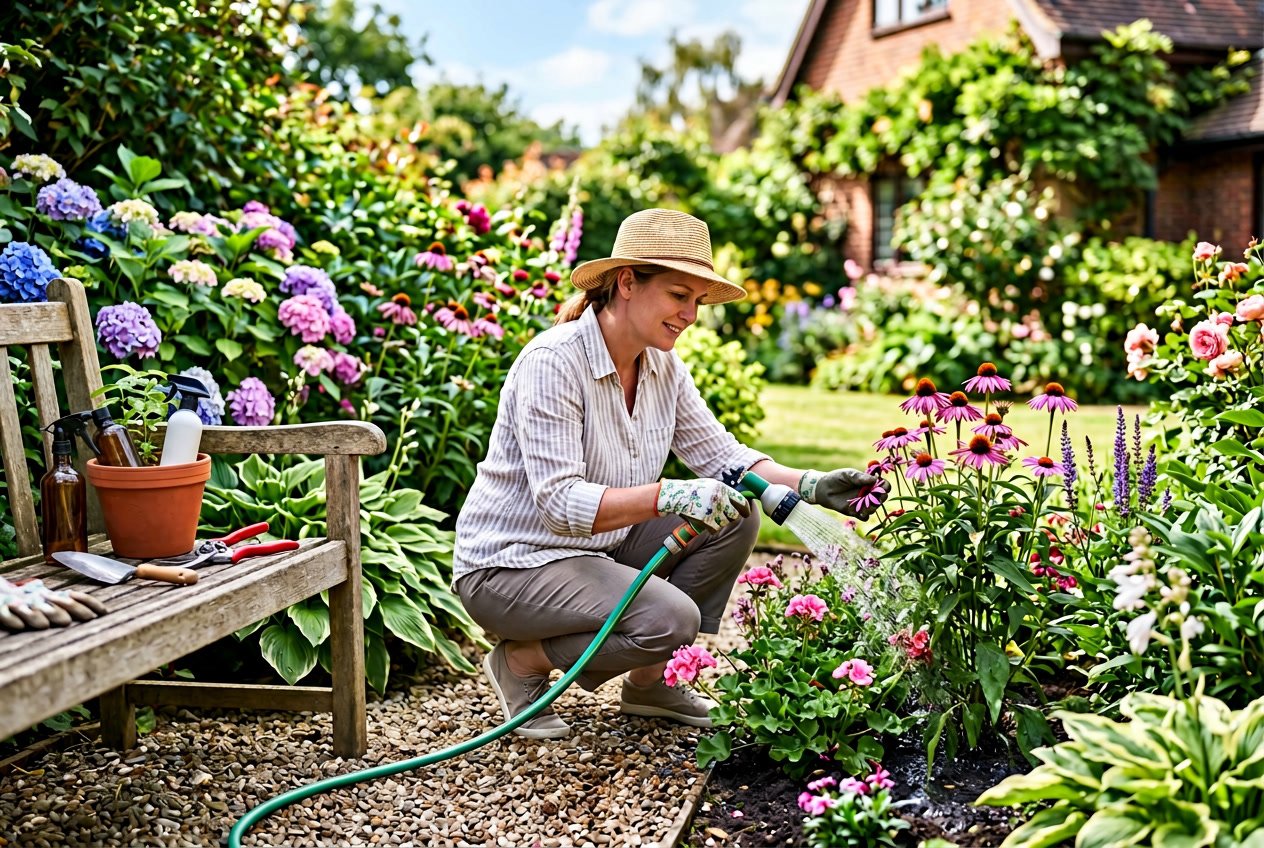
Your location really shapes when to water, which pests to watch, and how to tweak your care schedule. Every climate zone throws its own curveballs in summer.
Adapting Schedules to USDA Hardiness Zones
Zones 3-5 (Northern Regions)
Cooler nights and less brutal heat mean you can water twice a week deeply, always in the early morning. Cool-season grasses still hang on in summer up here.
Start watering when temps hit 75°F or higher. Aim for about 1 inch of water per week. Check soil moisture a couple of inches down before adding more.
Zones 6-7 (Transition Zones)
You’ve got mixed grasses and unpredictable summer swings. Water three times a week when it’s over 85°F. Mornings between 6 and 10 AM help keep fungi at bay.
Pest pressure ramps up in midsummer. Watch for Japanese beetles and grubs starting in July. Go easy on fertilizer—lighter doses in June and August work best.
Zones 8-10 (Southern and Coastal Regions)
During heat waves above 95°F, you might need to water daily. Warm-season grasses want frequent, shorter watering sessions. Early morning irrigation is your best friend for saving water.
Heat stress looks different here. Watch for curled leaves and dry soil. You’ll need to check moisture often—things dry out fast.
Community Approaches to Summer Garden Maintenance
Join local gardening groups to swap water-saving tricks that actually work where you live. Community gardens often team up on pest management to reduce chemical use for everyone.
Local Cooperative Extension Services
Your county extension office offers free soil tests and pest IDs. They’ll give you watering guidelines based on the current weather. Ask about pest alerts for your area—they’re usually up to date.
Neighborhood Water Conservation Programs
Many towns hand out rebates for drip irrigation systems. Go in with neighbors on rain barrels to save cash. Your water district might even offer free water audits.
Shared Pest Monitoring
Work with neighbors to track pest levels across yards. Early warnings help everyone react faster. Set up sticky traps as a group to monitor bug activity.
Visual Reference: Authentic Images and Video Guides
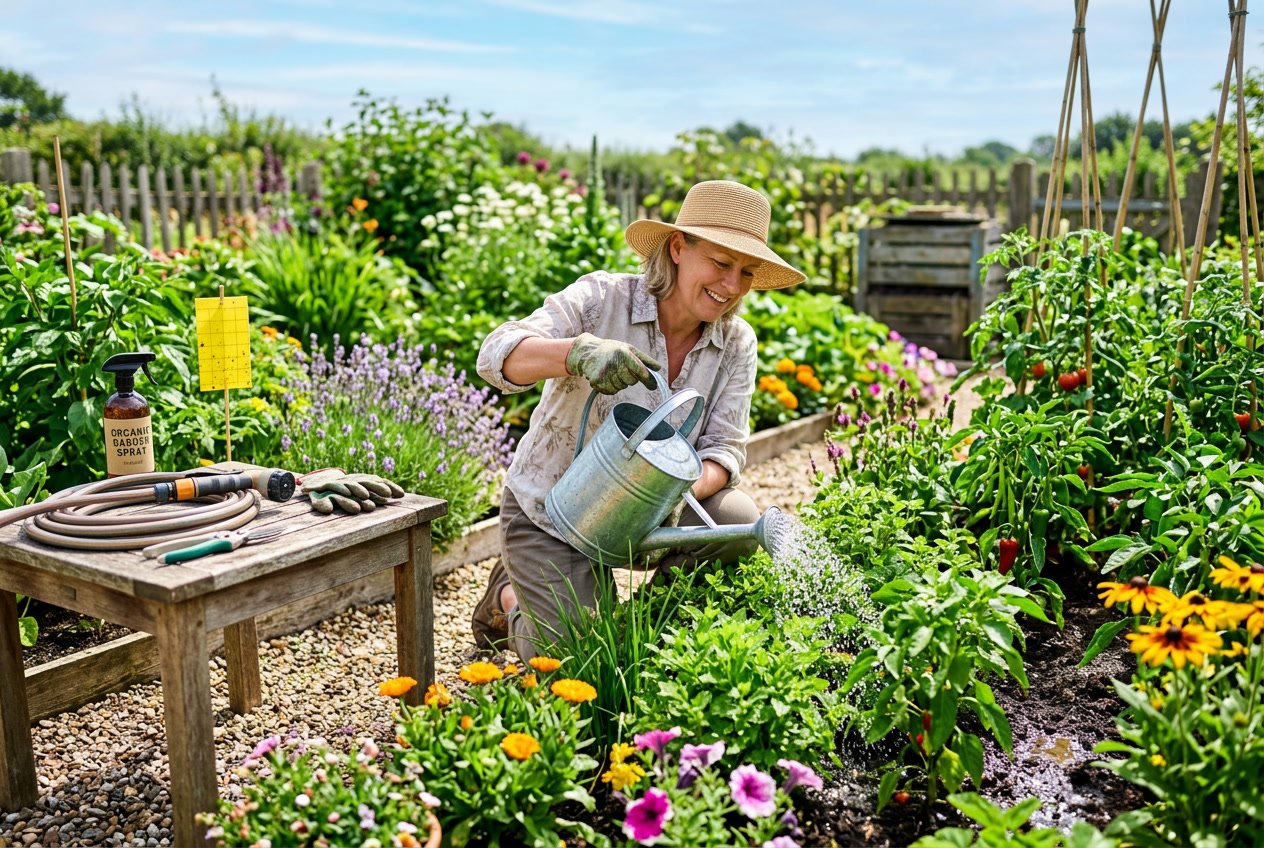
Learning to spot plant problems and get watering right is so much easier when you can see what’s normal and what’s not. Photos and videos break it down step by step.
Key Visuals: Spotting Water Stress and Pest Damage
Underwatered plants have some clear signs. Leaves crisp up at the edges and curl in. Soil pulls away from the pot, and cracks show up on the surface.
Wilting usually happens in the hottest part of the day and doesn’t fix itself overnight. That’s a classic sign you’ve waited too long to water.
Overwatered plants are a different story. Leaves go yellow but stay soft and floppy. The soil feels wet and might even smell sour.
Roots can rot and turn brown or black instead of staying white and firm. It’s not pretty, and it’s tough to reverse.
Common summer pests leave some obvious clues:
-
- Aphids crowd on new growth and under leaves
-
- Spider mites spin fine webs between stems
-
- Japanese beetles chew leaves until only the veins are left
-
- Whiteflies burst up in clouds when you brush the plant
-
- Caterpillars munch irregular holes through leaf centers
Demonstration Videos: Summer Watering Techniques
Deep watering videos help you learn to water slowly at the base of your plants. Instead of spraying the leaves, focus on the soil until water reaches a depth of 6-8 inches.
Land-grant universities like Michigan State and Texas A&M offer free tutorials on these irrigation methods. Their videos are easy to follow and surprisingly practical.
Drip irrigation setup guides break down the basics of installing efficient watering systems. You’ll see how to space out emitters and set up timers for those early-morning hours, usually between 5 and 9 AM.
Mulching technique videos show you exactly how to apply a 2-3 inch layer around your plants. They also remind you to keep mulch away from stems, which helps prevent rot and maintain steady soil moisture.
Advantages and Disadvantages of Different Summer Care Methods
Picking the right watering system and pest control method really shapes how your garden handles summer heat. Each choice has its own ups and downs—sometimes it’s a trade-off between cost, effort, and what you get out of it.
Comparing Manual and Automated Watering Systems
Manual watering gives you full control over where and how much you water. You can check the soil with your hands and adjust on the spot.
If you already have a hose or watering can, it won’t cost you extra to get started. That’s always a plus in my book.
Advantages of Manual Watering:
-
- No extra equipment or installation costs
-
- You get to inspect your plants closely every time you water
-
- Easy to give a little extra water to plants that need it
-
- Perfect for small gardens or container setups
Disadvantages of Manual Watering:
-
- Takes up a good chunk of time, sometimes daily
-
- It’s easy to forget or skip watering when life gets busy
-
- Inconsistent amounts can stress plants
-
- Not ideal if you’re away during the summer
Automated systems—like drip irrigation or sprinkler timers—water on a schedule so you don’t have to remember. You’ll find options from basic hose timers ($25-50) to full drip kits ($100-500 for a typical yard).
These systems water at the best times, such as early morning, to reduce evaporation.
Advantages of Automated Systems:
-
- Keep soil moisture steady with regular watering
-
- Automatically water during those cool early hours
-
- Save water by targeting the root zone
-
- Free up your time for planting, pruning, or just relaxing
Disadvantages of Automated Systems:
-
- Upfront cost for equipment and setup
-
- Need occasional maintenance or repairs
-
- If something breaks, you might overwater or underwater by accident
-
- Not as flexible for plants with shifting water needs
Organic vs. Chemical Pest Management Pros and Cons
Organic pest control relies on methods such as beneficial insects, neem oil, insecticidal soap, and companion planting. Chemical pesticides work faster but come with their own set of risks.
Organic Pest Management Advantages:
-
- Safe for kids and pets in the garden
-
- Won’t harm bees, butterflies, or other helpful insects
-
- Builds up soil and ecosystem health over time
-
- No toxic residue on your veggies or fruit
Organic Pest Management Disadvantages:
-
- Slower to show results than chemical options
-
- May need to reapply several times for tough infestations
-
- Sometimes costs more per treatment
-
- You’ll need to learn a bit about pest life cycles
Chemical Pest Management Advantages:
-
- Quickly knocks out pests
-
- One treatment often solves big problems
-
- Easy to find at any garden store
-
- Clear label instructions
Chemical Pest Management Disadvantages:
-
- Kills good insects as well as pests
-
- Can pollute soil and groundwater
-
- It may be risky for pets, kids, or wildlife
-
- Pests can become resistant if you use the same product often
-
- Requires careful handling and sometimes safety gear
Key Giveaways and Actionable Summary
Sticking to a steady watering routine and catching pests early really sets your summer garden up for success. The steps you take now can make a huge difference when the heat peaks.
Future-Relevant Tips for Sustainable Summer Gardening
Try watering in the early morning, between 5 and 9 AM. This cuts evaporation by nearly a third compared to watering at midday.
Water deeply just two or three times a week to help roots grow stronger, rather than giving a little water every day.
Set up drip irrigation or soaker hoses to get water right to the roots and keep leaves dry. You’ll use about half the water of overhead sprinklers, and you’ll avoid fungal diseases that love wet foliage.
Climate-Smart Watering Adjustments:
-
- USDA Zones 7-8: Water every 3-4 days during the hottest stretch
-
- USDA Zones 9-10: Every 2-3 days, and try to provide afternoon shade
-
- USDA Zones 4-6: Water every 4-5 days, unless it’s over 85°F
Spread 2-3 inches of organic mulch around your plants to keep soil moisture steady and regulate temperature. Always check the soil a couple of inches down before you water—no one likes soggy roots.
For pests, look over your plants twice a week for signs of aphids, spider mites, or whiteflies. Pluck off any affected leaves right away, and spray neem oil in the evening to avoid burning them.
Internal and External Resources for Further Learning
Your local Cooperative Extension office offers free soil testing and pest ID through extension.org. It’s a great way to get advice that actually fits your garden, not just generic tips.
The USDA Plant Hardiness Zone Map at planthardiness.ars.usda.gov helps you figure out your zone for more accurate watering. You can compare this with your area’s rainfall stats at weather.gov and tweak your irrigation.
Essential Summer
-
- Soil moisture meters ($15-30) for quick checks
-
- Adjustable spray nozzles for more precise watering
-
- Organic sprays like neem oil or insecticidal soap
-
- Rain gauges so you know when nature’s done the work for you
Download free IPM (Integrated Pest Management) guides from epa.gov/safepestcontrol for chemical-free pest fixes. These guides have handy photo charts for common summer pests and the good bugs you’ll want to keep around.
Take The Next Steps
Alright, you’ve got what you need to keep your summer garden thriving—think smart watering and a little vigilance with pests. Start by figuring out your local climate zone so you can tweak your watering times to match.
Set up your watering schedule sometime this week. Honestly, early mornings tend to work best for most gardens, but don’t just take my word for it—see what your plants like.
Before you water, poke around and test your soil moisture. You really don’t want to overdo it and drown those roots.
Your action plan:
-
- Make a watering calendar that matches your plant lineup.
-
- Consider installing drip irrigation or soaker hoses to make things easier (and who doesn’t?).
-
- Give your plants a once-over every day to catch pests early.
-
- Keep some natural pest control options handy, just in case.
-
- Jot down what actually works in a garden journal—you’ll thank yourself later.
Every morning, especially during those blazing summer months, stroll through your garden. Keep an eye out for wilting, weird colors, or signs of pests. If you catch things early, you can usually nip problems in the bud.
Tools you need:
-
- A moisture meter (trust me, it makes life easier)
-
- A solid garden hose with an adjustable nozzle
-
- Some organic pest control products
-
- Mulch—great for locking in moisture
Your garden’s needs will shift as the summer rolls on. Heat waves? You’ll need to water more. If it rains a lot, you can skip a session or two.
Snap a few photos of your plants every week. It’s a simple way to track growth and catch changes before they get out of hand.
Share your progress with local gardening groups if you’re up for it. You might pick up a tip or two, or even make a gardening friend.
Try out these strategies starting today. With a little effort, you’ll see healthier growth, brighter colors, and—hopefully—a bumper harvest as summer unfolds.